
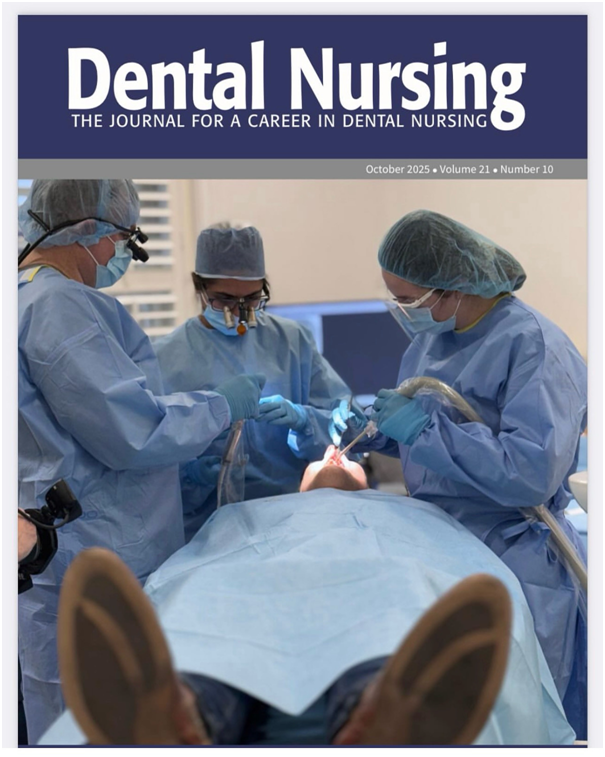
3 October 2025 Sophie Dyte Professionalism/career development Dental implants
Sophie Dyte details her journey from trainee dental nurse to lead dental nurse and course co-ordinator.
To give a little background about me, I am currently a lead dental nurse and course coordinator at The Dental Implant Clinic, a specialist referral practice based in Bath. As the name suggests, our primary focus is dental implants, but we also take a multi-disciplinary approach to patient care. Our team comprises specialists in endodontics, periodontics, oral surgery, restorative dentistry, orthodontics, and more recently, general dentistry. All of these extremely talented clinicians are supported by our fantastic dental hygienist, who plays a key role in maintaining the oral health of our wonderful patients. Our team of clinicians are supported by a team of incredibly skilled and talented dental nurses and our amazing admin team who keep everything in check!
I began my career as a trainee dental nurse in 2021 at The Dental Implant Clinic, after completing my A-Levels during the covid pandemic, and to be honest, I have never looked back. Starting my career during the pandemic was challenging with enhanced PPE and constant adjustments to new safety guidelines. I was learning in an environment unlike anything that had come before; however, I didn’t know any different, which helped immensely. Working in a specialist referral practice as a trainee dental nurse was eye-opening to say the least. I was exposed to so much so early on, that it could go one of two ways – either sink or swim! Luckily, I swam. This was in large part due to the help of my incredible lead dental nurses at the time, who pushed me through those challenging early days and believed in me when I was finding my feet. By my fourth week at the practice, I was covering implant placement appointments alongside our implantologist due to a fellow dental nurse’s sickness, and I truly believe that experience helped shape me into the person I am today.
Training in this environment was unique compared to other trainees on my course, but also possibly one of the best things that happened for me. While some colleagues on my course had a day list full of fillings, crown preparations, and examinations, I was faced with a day full of complex surgical extractions and implant placements. It was intense and sometimes overwhelming, but it pushed me to quickly develop my skills and confidence. Those early experiences taught me the importance of staying calm under pressure, being detail-oriented, and working closely with the entire team to ensure the best outcomes for our patients, which I believe are the key attributes of a dental nurse. Looking back, I’m grateful for those demanding days — they truly accelerated my growth and deepened my passion for dental nursing.
I qualified in November 2022, which is one of my biggest achievements to date. After that point, I began training for my post-qualification in intravenous sedation, something we use frequently in practice due to the invasive treatments we complete. I spent several months assisting with any sedation cases that were in the diary, gaining valuable experience and knowledge from both the seditionists and sedation-trained dental nurses in the practice. During this time, I also spent any time I could learning and expanding my knowledge. My lead dental nurse was also involved in courses and study days held at the practice, and welcomed me to learn alongside her and assist with her involvement. This not only expanded my knowledge and helped me network, but also gave me the confidence to take on greater responsibilities, which would benefit me later on in my career.
In September 2023, our lead dental nurse, Gemma, sadly left the practice to start a new adventure, leaving her role wide open. At the time, I was the only full-time dental nurse at the practice, and we soon employed another qualified dental nurse to fill the void. With that, I naturally stepped into the lead dental nurse and course coordinator position, beginning officially in January 2024. Taking on that role was both exciting and daunting. I felt a strong responsibility to support the team and also uphold the high standards our patients expect. This transition meant quickly developing leadership skills, managing diaries, overseeing training, and serving as the key liaison between the clinicians, the dental nurses and the admin team. While challenges arose, patient care remained my top priority. Balancing clinical duties with administrative tasks demanded organisation and focus, which in turn built my confidence in decision-making and prioritising. The mentorship I had received earlier in my career laid a solid foundation for success, and the unwavering support from my team made the transition even smoother. This opportunity pushed me to grow professionally and personally in ways I had not anticipated, but am still to this day incredibly grateful for.
As I am sure you can see, over time, I have developed a deep passion for dental nursing and supporting patients through their complex treatment plans. Through dedication, continuous learning, and hands-on experience, I have grown into my current leadership role, where I now mentor others and contribute to the smooth running of a busy practice. My days are also spent organising and running all of our educational opportunities in the practice, which includes our implant dental nursing course, which I and a colleague teach. I find all this incredibly rewarding and continue to follow my ethos of teaching and empowering other like-minded dental nurses. I know how much excellent potential is out there!
Top tips for dental implant nursing
With that being said, I also want to include some of the top tips for dental implant nursing that I have picked up over the years and that have helped me immensely with the smooth running of the practice:
- Organisation is key. Being organised is one of our main responsibilities as a dental nurse; however, this rings even more true when you begin assisting with dental implants. The team and I will always check the surgeries for the day before to ensure everything we need is ready. At the practice, we work with kit boxes and find this is the easiest way to remain organised prior to placement. All we need is the implant kit box, sundries box, drape pack and motor, and we are ready. Kit boxes ensure that everything is ready in the right place, so we don’t have to look for that one misplaced item before setting up for the surgery. This reduces any stress or pressure within the team. Other things we check prior to the surgery day are the patient’s surgical guide and ensuring that it has been returned from the lab, and also checking that the requested implants are here for the placement. We also ensure that all consent forms are completed before the implant placement appointment, so that is another thing you can check before the exciting day. Failure to prepare = preparing to fail!
- Cross-infection. Implant surgery is invasive and requires impeccable aseptic technique. Be meticulous with sterilisation, barrier setup, and maintaining a clean surgical field. Mistakes happen; sometimes we can accidentally touch something with our surgical gloves that is not in our surgical field. Just ensure you speak up and do the right thing by rescrubbing in.
- Know your implant kits inside out. Similarly to root canal treatment, there can be a great deal to set up for dental implants, so know your kits inside out and train your team so that when they are being set up, cleared down and decontaminated, you all know if something is missing!
- Communication is key. This is vital, both with your patient and your implantologist. Implant treatments are long procedures and can be intense for both the team and the patient. Ensure you are communicating with all participating members to ensure everyone is ok, and reassure the patient whenever it is necessary.
- Documentation. Keep documentation accurate and up to date, especially in terms of consent, batch numbers of drape packs, implants and bone grafting materials. Ensure the post-op instructions are given to the patient both verbally by the clinician and in writing in their post-operative pack, so patients are able to refer back to the instructions later.
- Keep learning. Implant dentistry is constantly evolving, so I encourage you to attend courses and always ask questions. If you ever have any questions about the implant system you are using, then always ask your sales representatives. The more you know, the more valuable you become in the surgery. The International Team of Implantology (ITI) have their very own online dental nurses study club, which I always find very engaging. It is also another great place for networking with other like-minded dental nurses around the UK.
- Be proud of your role. Implant dental nursing is highly skilled, hands-on, and rewarding. Recognise your value in the success of every case, and never stop striving to be the best nurse you can be.
Article published: https://www.dental-nursing.co.uk/content/features/recognising-your-value
Magazine: Dental Nursing