
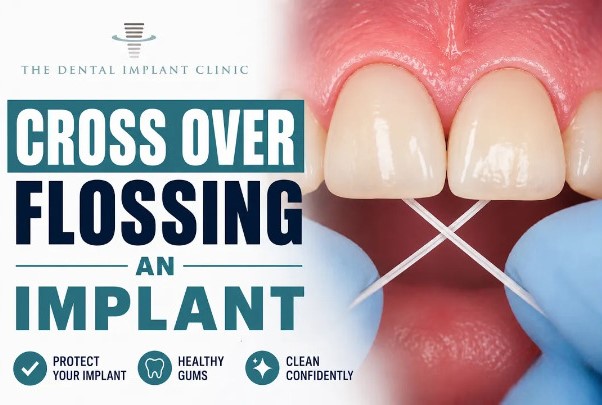
Before reading on, watch the short video below to see how to correctly perform the cross-over flossing technique around your dental implant.
Cross-over flossing is an important part of keeping the areas around your implant clean and healthy. The video will demonstrate the technique step by step, helping you feel more confident when carrying out your daily implant care at home.
▶ Watch the video below to learn the technique
Please remember that your individual cleaning routine may vary depending on the type of implant restoration you have. If you are unsure, always ask your dentist or hygienist for personalised advice and a demonstration.
Dental implants are a fantastic long-term solution for replacing missing teeth. With the right care, they can help restore your smile, confidence and ability to eat comfortably. However, just like natural teeth, dental implants need regular cleaning and professional monitoring to help keep the surrounding gums and bone healthy.
At home, cross-over flossing can be an important part of cleaning around implants. Combined with regular hygiene appointments and yearly implant reviews, it can help protect your investment and support the long-term health of your implant.
What is Cross-Over Flossing?
Cross-over flossing is a technique used to help clean around the implant and beneath areas that can be difficult to reach with a toothbrush alone.
The floss is carefully guided around the implant crown and crossed over, allowing it to gently clean around the sides of the implant restoration. This can help remove plaque and food debris from areas where bacteria may otherwise build up.
Your dental professional can demonstrate the correct technique for your individual implant. It is important to use the method and cleaning aids recommended for you, as every implant restoration is different.
Why is Cleaning Around an Implant So Important?
Although a dental implant cannot develop tooth decay, the tissues around it can still become affected by bacteria and inflammation.
If plaque is not removed effectively, the gums around an implant may become sore, swollen or bleed. In some cases, inflammation can progress and affect the supporting bone around the implant. This is why keeping the area clean is essential.
Regular cleaning at home can help:
- Remove plaque and food debris around the implant
- Keep the gums healthy
- Reduce inflammation
- Freshen breath
- Support the long-term health of the implant
Your Toothbrush Alone May Not Be Enough
Even with excellent brushing, some areas around an implant can be difficult to clean. This is especially true around bridges, implant-supported crowns and between teeth.
Your dental team may recommend additional cleaning methods such as:
- Cross-over flossing
- Interdental brushes
- Implant-specific cleaning aids
- Water flossing, where appropriate
The best cleaning routine depends on your individual mouth and the type of implant restoration you have. Always ask your dentist or hygienist to show you the technique that is most suitable for you.
The Importance of Regular Hygiene Appointments
Hygiene appointments play an important role in maintaining both your natural teeth and dental implants.
During your appointment, your hygienist can remove plaque and deposits from areas that may be difficult to clean at home. They can also check the health of your gums and monitor for any signs of inflammation around the implant.
Regular hygiene visits are also a great opportunity to review your home-care routine. Your hygienist can demonstrate cross-over flossing again, check whether your current cleaning aids are suitable and make recommendations based on your individual needs.
Why Do I Need a Yearly Implant Review?
Even if your implant feels completely comfortable, a yearly review is still very important.
During an implant review, your dental team can assess the health of the implant, surrounding gums and supporting bone. They may also check the implant crown, bridge or denture to ensure everything is functioning correctly.
A yearly implant review may include:
- Checking the health of the gums around the implant
- Assessing for signs of inflammation or infection
- Checking the stability and function of the implant restoration
- Monitoring the surrounding bone where clinically indicated
- Checking your bite and how your teeth come together
- Reviewing your cleaning routine
- Taking X-rays when clinically necessary
Regular reviews can help identify potential problems early, often before you experience any discomfort.
Protecting Your Investment
A dental implant is a long-term investment in your oral health and smile. Looking after it does not stop once the treatment is complete.
Effective daily cleaning, regular hygiene appointments and annual implant reviews all work together to help keep your implant healthy.
By following the advice of your dental team and maintaining a consistent home-care routine, you can give your implant the best possible chance of long-term success.
Remember
- Brush carefully around your implant every day
- Use cross-over flossing or other cleaning methods recommended by your dental professional
- Attend your regular hygiene appointments
- Do not miss your annual implant review
- Contact your dental team if you notice bleeding, swelling, discomfort or any changes around your implant
Your implant needs lifelong care — and a little attention today can help protect your smile for years to come.